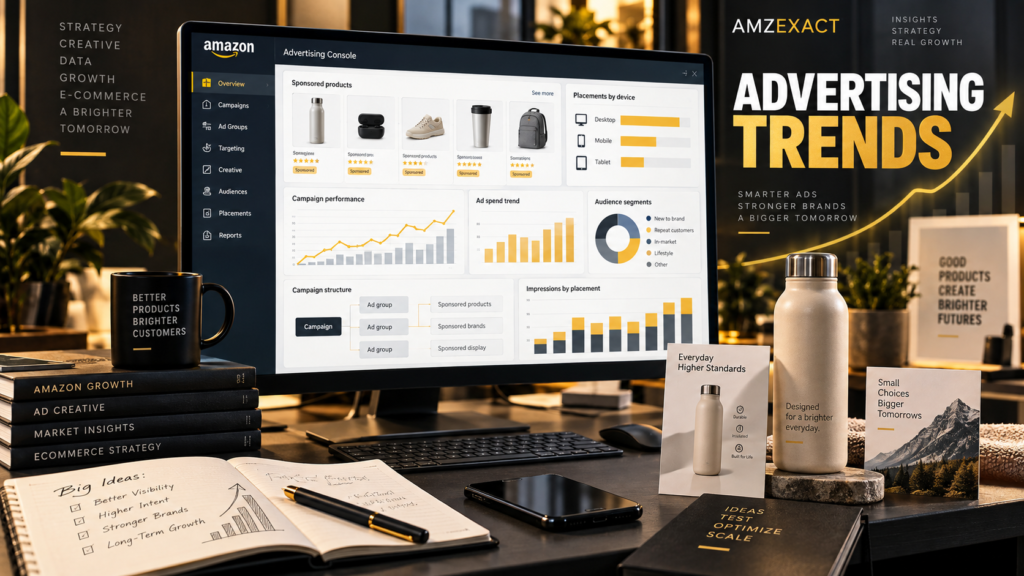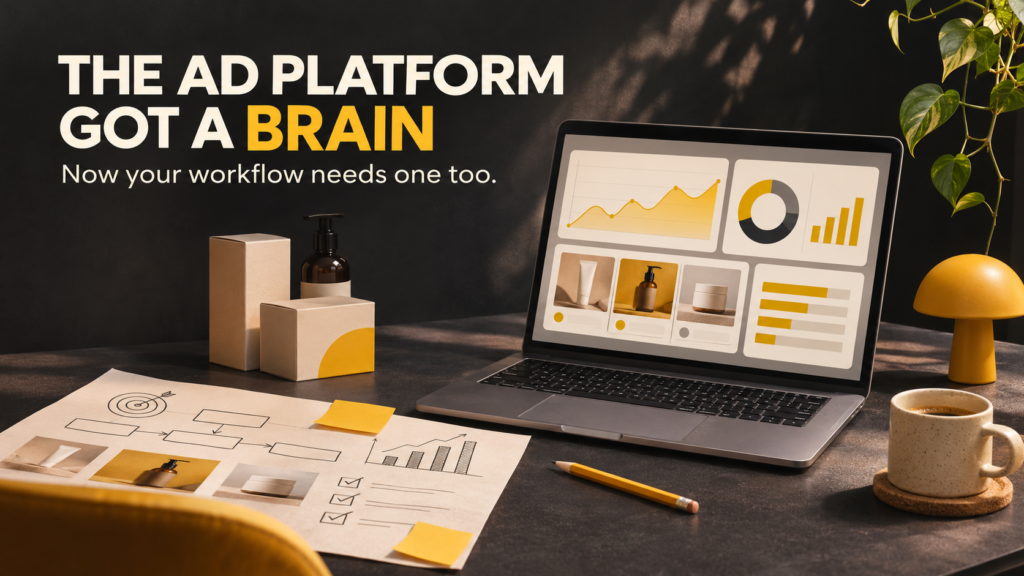
The ad platform may be getting smarter, but that does not mean your campaigns can run on autopilot. Amazon Ads Agent is being positioned as a more unified, AI-assisted way to plan, create, manage, and measure advertising. The useful question is not “Will AI replace campaign work?” It is “Which decisions should the tool speed up, and which still need a human?”
That distinction matters because a faster workflow can also produce faster mistakes. A tidy dashboard is not the same thing as a profitable campaign.
What the change actually means
Amazon’s recent advertising announcements point toward a more connected workflow: planning, creative development, campaign setup, targeting, and measurement are increasingly being brought closer together. That can reduce the number of disconnected screens and manual handoffs involved in a campaign.
But “more unified” does not automatically mean “more suitable.” The tool still depends on the inputs, objectives, product economics, and guardrails you provide.
Where an AI-assisted workflow can help
1. Turning a brief into a workable starting point
A good assistant can help turn a loose objective into a starting plan: which products deserve attention, which audience problem the campaign addresses, what creative angle might fit, and which measurement questions should be answered.
The value is speed at the beginning. You still need to check whether the brief reflects the real product, the real offer, and the real customer.
2. Reducing repetitive campaign work
Campaign teams spend time naming assets, organizing variations, checking settings, preparing drafts, and moving information between reports. Automation can make that work less tedious and leave more time for diagnosis.
That is where the human role becomes more important, not less. Someone still needs to notice when a “clean” setup is built around the wrong product, weak stock position, or unrealistic profitability target.
3. Connecting creative with performance
When creative and campaign data sit closer together, it becomes easier to ask better questions. Is the ad attracting the right kind of shopper? Does the promise in the creative match the product page? Are weak results caused by the ad, the audience, the offer, or the page after the click?
Those questions are more useful than simply asking which ad has the highest click-through rate.
Three risks to watch before you trust the automation
| Risk | What it looks like | Human check |
|---|---|---|
| Goal confusion | The tool optimizes a visible metric that is not the business objective. | Define the outcome and acceptable trade-off first. |
| Input pollution | Old, incomplete, or misleading product data shapes the recommendation. | Check the product, offer, inventory, and page before acting. |
| Fast wrong turns | More automation creates more changes before learning is possible. | Keep a change log and test one meaningful adjustment at a time. |
A practical way to use the new tools
- Write the decision first. State what you are trying to improve and what you will not sacrifice.
- Give the tool clean inputs. Check product information, creative assets, targeting context, stock, price, and contribution.
- Ask for options, not a verdict. Compare possible approaches and the evidence behind each one.
- Set boundaries. Decide which changes can be automated and which require review.
- Measure the full path. Look beyond clicks to qualified traffic, page behavior, orders, contribution, and customer experience.
What should stay human?
Keep judgment close to the decisions that affect positioning, promises, customer trust, and profitability. A system can identify patterns, summarize performance, or suggest a route. It cannot know whether a claim feels honest to a shopper, whether a product difference is meaningful, or whether a short-term lift is worth a long-term trade-off without context.
If the campaign is sending relevant traffic to a confusing page, improve the product experience before adding more automation. A product listing review can help connect the ad promise with the page the shopper sees.
The takeaway
AI-assisted advertising will probably make campaign work faster. The advantage will not come from accepting every recommendation. It will come from building a workflow where automation handles repetition and people protect relevance, clarity, and economics.
Use the new tools to ask better questions, test more deliberately, and spend less time moving data around. Keep the final judgment where it belongs: with the person accountable for the customer and the result.
When you need a broader review, explore AMZEXACT PPC management or the clicks-without-sales diagnostic.
Reviewed November 3, 2026. Advertising features and availability can change; verify current account options before applying any workflow.