Reviewed 6 October 2026. FNSKU labels, manufacturer barcodes and Transparency codes serve different purposes. This guide explains the current US FBA changes and the checks to complete before preparing a shipment. Requirements can differ by marketplace and product.
Understanding FNSKU Barcodes
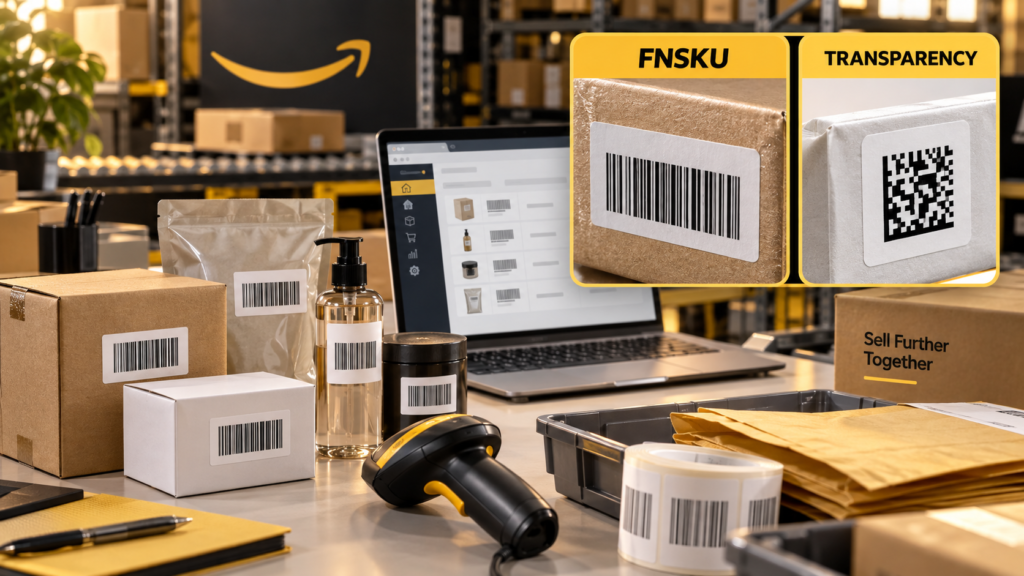
FNSKU stands for Fulfillment Network Stock Keeping Unit. It is an Amazon fulfillment identifier associated with an inventory offer. A manufacturer barcode identifies a product; an FNSKU is not a certificate that guarantees authenticity or a search-ranking benefit.
For inventory shipped on or after 31 March 2026, Amazon announced the end of commingling and updated barcode eligibility. Eligible brand owners with the Brand Representative selling role can use existing manufacturer barcodes; resellers need Amazon barcode stickers, and products without manufacturer barcodes still need Amazon barcodes. Confirm the applicable conditions in Amazon’s dated announcement and your shipment workflow.
Prepare Labels Before Your US FBA Shipment
Amazon ended US FBA prep and item-labeling services from 1 January 2026. Arrange compliant preparation with your supplier, warehouse or prep provider instead of budgeting for the former Amazon labeling service. See Amazon’s FBA Prep Service notice.
- Confirm the ASIN, seller SKU, marketplace and fulfillment method.
- Check the barcode option available for your product and brand role in Seller Central.
- Use the labels generated for the selected inventory offer.
- Send written preparation instructions to your supplier and approve a sample before the full batch.
- Keep label, batch and shipment records so receiving problems can be traced.
What FNSKUs Can and Cannot Protect
Correct inventory identification supports receiving, tracking and problem investigation. It does not independently prove that a product is authentic, prevent every fulfillment error or replace supplier quality controls.
Do not choose a labeling method based on outdated commingling advice. Use the requirements that apply to your shipment date, marketplace, product and account eligibility.
Amazon Transparency Codes Explained
Amazon Transparency is a product serialization program that uses unique unit codes to support authenticity verification. Confirm eligibility, packaging placement, code ordering and operational requirements with the program before production.
Transparency and FBA inventory labels serve different purposes. Do not assume that one automatically replaces the other.
Check the Requirements for Your Enrolled Product
There is no blanket rule that every Transparency-enabled unit must carry both an FNSKU and a Transparency code. Follow the barcode requirements for the inventory offer alongside the requirements for the enrolled product.
Before printing, check the approved code format and placement. If instructions conflict, resolve the issue with the relevant Amazon support or program team before shipping.
Run a Packaging Quality Check
- Scan a sample and match it to the correct product and variation.
- Check readability, placement and competing scannable barcodes against current instructions.
- Verify expiration, lot, bundle and safety requirements where applicable.
- Photograph approved packaging and retain the record.
- Inspect samples from the production batch before dispatch.
These checks support operational accuracy. They do not establish a direct ranking improvement or guarantee sales.
Get Help With the Preparation Workflow
Start with the instructions shown for your current marketplace and shipment. Then assign responsibility for label creation, application, inspection and record keeping.
Our inventory management service can help review SKU records, preparation handoffs and replenishment planning. Tell us your marketplace and current issue so we can agree the scope.